Modernisation of a waste sorting plant is usually understood as rebuilding the existing production line. However, it can also be viewed more broadly – as upgrading the entire plant’s infrastructure, which may even involve constructing a completely new facility. In this sense, the modernisation of a sorting plant is an investment process with its own specific conditions and characteristics. It requires significant financial resources (often millions of zlotys), considerable time for preparation and completion (typically several years), and appropriate spatial arrangements. The outcomes of such an investment generate long-term effects.
Therefore, the modernisation of a waste sorting facility is both important and consequential – not only because of its costs, but primarily because of the results it can deliver and the strategic objectives it can help achieve. The modernisation of a sorting plant or its infrastructure should be seen as a practical implementation of waste management policy, both at the local (micro) and national (macro) levels. Just as modernising a sorting plant can contribute to achieving waste policy goals, the absence of such a policy – or its lack of clarity – can lead to partial or even complete failure of the investment.
The purpose of this article is to explore the following questions: Why is there a need to modernise municipal waste sorting plants in Poland? What factors limit the modernisation process? What guidance for modernisation can be drawn from recent changes in the legal framework governing waste sorting facilities? How is the need for modernisation actually shaped? And how should preparation for such an investment begin?
The impact of the environment on the direction of sorting plant modernisation
The situation of individual municipal waste sorting facilities is shaped by both general external factors and those specific to each plant.
It is important to note that 2025 has brought significant changes to the conditions under which these facilities operate. These include:
- increasing recycling targets for both municipal and packaging waste, which require more effective sorting, improved recovery of secondary raw materials, and better preparation for recycling,
- the introduction of a deposit-return system, which undermines the economic foundation of sorting plants. It reduces their revenue from the sale of recovered material fractions – previously one of a key source of funding – by several dozen percent (see also: Economic consequences of introducing a deposit-return system for municipal waste sorting plants),
- the adoption of the Packaging and Packaging Waste Regulation (PPWR), which over the coming years will transform waste composition, standardise technological objectives for sorting, increase demand for material fractions, and justify changes in sorting technology,
- the absence of an effective Extended Producer Responsibility (EPR) system, which could provide economic and market-based incentives for facilities to accept waste and prepare it for recycling. In other words, a key mechanism is currently missing – one that would create stable, long-term motivation for all actors in the waste management chain, including sorting plants, to perform their proper roles and meet regulatory targets.
All of these changes affect not only the technology and economics of sorting plant operations but also the approach to planning future investments.
These developments are unfolding against a broader backdrop characterised by:
- low levels of achievement in meeting waste management targets,
- a significant gap between the quantity of waste generated and the technological capability required to process it effectively,
- the government’s waste management policy and its associated economic instruments,
- and the overall design of the waste management system.
Legal, political, systemic, and economic factors together influence the direction that efforts to modernise waste sorting plants – and, more broadly, the entire waste sorting infrastructure – should take.
The future of waste management depends on government policy, system design, and economic instruments
The key question about the future of waste management is not simply about the current low recycling rates, the gap between waste volumes and sorting capacity, or even the challenges posed by the new deposit-return system, rising recycling targets, and forthcoming PPWR requirements.
The real paradox lies elsewhere: despite having clear targets, numerous new regulations, and frequent “key reforms,” the greatest obstacle to investment is the growing uncertainty felt by plant owners and operators. This uncertainty stems from an unclear or inconsistent government policy, a poorly designed waste management system, and the lack of effective economic instruments. In business terms, these factors make it difficult to define the direction and scale of investments and to ensure their profitability. These are the central issues shaping the future of waste management in Poland.
To address them, the sector needs:
- a clear and coherent national waste management policy outlining how Poland intends to achieve its recycling targets across different waste streams,
- a system in which all stakeholders in the waste treatment chain actively contribute to achieving these goals through their own operational responsibilities,
- and an effective financial mechanism that ensures stable funding and provides economic motivation for all system participants to operate efficiently and invest in alignment with policy objectives.
In this respect, and on a macro level, solutions should first be sought to improve recycling performance and optimise the overall costs of waste management. For comparison, the Czech Republic has significantly higher recycling rates for both municipal and packaging waste, yet its citizens pay roughly half as much for waste services. This demonstrates that the Czech system is several times more efficient than the Polish one.
The approach outlined above would mean that waste sorting plants, as well as other entities responsible for waste management, would operate in an environment where:
- it is clear which direction to take in seeking solutions and how to act,
- the roles of all participants in the waste management system are clearly defined,
- each participant knows what kind of support they can expect, which helps strengthen their motivation to invest, operate effectively, and cooperate in achieving shared goals,
- the system is perceived as rational, coherent, and consistent.
For plant owners, operators, and investors, understanding what to expect and which direction to take is essential for making sound decisions and long-term plans. Reducing investment uncertainty, improving financial predictability, and ensuring the profitability of these long-term projects are crucial for the stability and success of the entire sector.
What conclusions can be drawn for sorting plants from the changes in their operating environment?
In this context, we should try to look at the changing conditions and understand the current needs for modernising sorting plants in Poland. Let’s use as an example a plant that currently processes about 10,000 tonnes of separately collected plastics (the “yellow bag” waste) in one shift. The following changes will be considered in the analysis:
- the introduction of the deposit-return system,
- rising waste recycling targets,
- the lack of a properly adapted EPR system to support sorting plants (the draft law on EPR from August 7, 2025, is unclear on this),
- the introduction of the PPWR and its effect on sorting processes.
When assessing the impact of these changes on municipal waste sorting plants, it is important to see how they affect three key factors that determine the effectiveness of sorting:
- the mass of waste received for sorting,
- the recovery rate of material fractions prepared for recycling,
- the value per unit of the material fractions separated by the plant.
The effects of the changes being introduced in these areas are highly important for the sorting plant modernisation process and for the economic justification of different investment directions or choices.
In this context, it is essential to examine the changing conditions and understand the current needs for modernising sorting plants in Poland. Let us take as an example a facility that currently processes around 10,000 tonnes of separately collected plastic waste (the so-called “yellow bag” stream) in a single shift.
The following changes will be considered in this analysis:
- the introduction of the deposit-return system,
- increasing recycling targets,
- the absence of a properly adapted Extended Producer Responsibility (EPR) system to support sorting plants (the draft EPR law of 7 August 2025 remains unclear in this respect),
- the introduction of the Packaging and Packaging Waste Regulation (PPWR) and its impact on sorting processes.
When assessing the effects of these changes on municipal waste sorting plants, it is important to consider their influence on three key factors that determine sorting efficiency:
- the quantity of waste received for sorting,
- the recovery rate of material fractions prepared for recycling,
- the unit value of the material fractions separated by the plant.
The impact of these changes on the above areas is of crucial importance for the process of modernising sorting plants and for evaluating the economic rationale behind different investment options and directions.
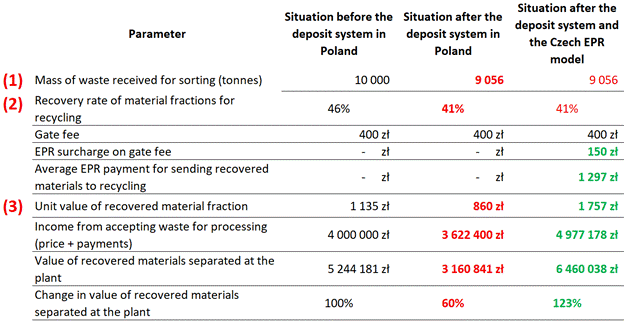
Table. Impact of environmental changes on the efficiency of municipal waste sorting plants.
Effects of the deposit-return system on waste sorting plants
The example presented in the table illustrates the situation of a municipal waste sorting plant based on representative operating figures. The second column shows the plant’s performance before the introduction of the deposit-return system. Out of 10,000 tonnes of waste delivered for sorting, 46% was separated as valuable material fractions and sent for recycling. The gate fee amounted to 400 PLN per tonne. The average value of one tonne of recovered material – including both the market sale price and the value of recycling confirmation documents (DPR) – was 1,135 PLN. Consequently, the plant’s total revenue from gate fees was 4 million PLN, while revenue from the sale of recovered materials reached approximately 5.24 million PLN.
The third column shows the projected situation after the deposit-return system is implemented. This system removes the most valuable materials – PET bottles and aluminium cans – from the plastic waste stream delivered for sorting. As a result:
- the amount of waste received for sorting will decrease (by about 10% in this example, corresponding to the share of PET bottles and aluminium cans in the plant’s plastic stream),
- the recovery rate of material fractions intended for recycling will drop by around 5 percentage points,
- the average unit value of the recovered material will fall by roughly 24%.
As a combined effect of these changes, the total revenue of the example plant is expected to decrease from approximately 9.24 million PLN to about 6.78 million PLN – a decline of around 27%.
This substantial impact of the deposit-return system on the financial performance of sorting plants results from its negative influence on every factor that determines the value such facilities create: the mass of waste received for sorting, the recovery rate of recyclable fractions, and the average unit value of separated materials.
A detailed analysis of the financial consequences of the deposit-return system can be found in the previously referenced article.
Impact of new conditions on the achievement of increasing recycling targets
Waste sorting plants are responsible for processing waste and preparing it for recycling. The deterioration of their financial situation caused by the introduction of the deposit-return system will significantly reduce the profitability of future investments. The decline in revenues from the sale of recovered materials will weaken the financial standing of sorting plants, hinder their day-to-day operations, worsen their business performance, and make it increasingly difficult to meet the rising recycling targets.
The challenges faced by sorting plants will, in turn, translate into problems for local municipalities, which are responsible for achieving the required recycling levels for municipal waste. In 2025, the minimum recycling rate is set at 55%, increasing by one percentage point each year until it reaches 65% in 2035. Failure to meet these targets will result in financial penalties. These fines are calculated based on the cost of landfilling mixed waste, multiplied by the number of tonnes missing to meet the required recycling level.
As sorting plants experience a substantial drop in income from the sale of sorted materials and face growing pressure to improve efficiency, the fees for accepting waste for sorting will inevitably rise. Ultimately, these higher costs will be passed on to local residents.
Lack of an effective EPR mechanism supporting sorting facilities
To make it possible to achieve the increasingly ambitious waste management targets – higher levels of recovery and preparation for recycling – a system must be introduced that restores profitability, provides market-based funding to meet waste objectives, ensures operational stability, and motivates facilities to recover every possible tonne of valuable material.
It should be noted that maintaining the current DPR (Document Confirming Recycling) system does not improve the financial position of sorting plants (see columns two and three in the table). Moreover, the existing DPR mechanism fails to provide stable financial support. When DPR prices are high, they encourage facilities to sort and recover materials more efficiently, as the process becomes economically rewarding. However, when DPR prices fall sharply – as happened at the end of 2024 – the financial incentive to operate effectively collapses.
Such volatility not only destabilises day-to-day operations but also increases investment uncertainty. Given that the secondary raw materials market is already unpredictable, fluctuations in DPR prices make it even more difficult to assess whether an investment will be economically viable. As a result, the current DPR system does not ensure steady progress toward achieving waste management goals, either at the local or national level.
To create an effective financial framework that truly motivates sorting facilities to invest and contribute to the waste management system, a new solution is needed – one that is not based on speculation but instead reflects the real costs of recovering and recycling various types of materials. This mechanism must be stable over time, providing continuous incentives for consistent operation, efficient material preparation for recycling, and long-term investment – factors essential for achieving environmental objectives.
The Czech EPR system serves as a valuable example. There, payments to sorting plants for accepting packaging waste for processing play a stabilising role. Additional bonuses are provided for every tonne of material separated for recycling, with the amount depending on the number and type of materials sorted. Furthermore, facilities receive payments for producing refuse-derived fuel (RDF), with the rate linked to the quantity of materials recovered for recycling.
The fourth column of the table illustrates how the Czech EPR model influences the key factors determining the operational effectiveness of sorting facilities. It is based on two principal financial mechanisms: a payment for each tonne of waste accepted for sorting, and a payment for each tonne of material prepared for recycling.
The details of the Czech EPR model are discussed in a separate article. Unfortunately, the introduction of a similar financial mechanism to support Polish sorting facilities still appears to be a distant prospect.
Impact of the PPWR on sorting technology and process efficiency
From the perspective of municipal waste sorting plants, the Packaging and Packaging Waste Regulation (PPWR) is expected to increase the proportion of recyclable materials in the waste stream delivered for sorting. This should translate into a higher share of single-material plastics (such as PE, PP, and PET) and a smaller proportion of composite or multilayer packaging. The physical characteristics of packaging materials are also expected to improve (for example, colour uniformity), while the amount of problematic and hard-to-recycle waste will decrease. As a result, the overall quality and recovery potential of waste entering the sorting process will increase. With the same technological setup, this should lead to higher recovery rates and better preparation of waste for recycling.
At the same time, a key objective of the PPWR is to promote the use of recycled materials in the production of new plastic packaging. This requirement is expected to boost demand for recycled feedstock. For sorting plants, this means greater demand for the material fractions they recover, which – if other conditions remain unchanged – should lead to an increase in the market value of sorted materials.
However, the effects of the PPWR on sorting plants will be primarily long-term, unfolding over several to a dozen years. In contrast, the negative impacts of the deposit-return system and the absence of an effective EPR mechanism are already being felt today. The broader technological implications of the PPWR for sorting processes were discussed in the previous article in this series.
Contradictory signals for sorting facilities resulting from the external environment
The conditions under which waste sorting plants operate are of fundamental importance. An analysis of these conditions should provide clear guidance for facilities, particularly when planning investments. However, the signals currently coming from the operating environment are contradictory.
On one hand, the government is setting increasingly ambitious recycling targets. On the other, the financial position of sorting plants is deteriorating due to the implementation of the deposit-return system. At the same time, no mechanism – such as an EPR system providing financial support to sorting plants – has been introduced to counterbalance this situation.
As a result, the current waste management policy appears unclear and internally inconsistent from the perspective of waste processing facilities.
The need to modernise waste sorting plants is shaped by the intersection of external changes and individual conditions
The factors arising from external conditions are always interpreted through the specific and unique circumstances of each individual plant. These include the facility’s own operational experience, the level of technological advancement, and the condition of its existing equipment.
In addition, the plant’s situation is defined by the expected waste streams delivered for processing and their composition (morphology), as well as by its business and technical objectives. Equally important are existing constraints such as the size of the facility, possibilities for site expansion, surrounding land use, permitting conditions, and logistical, financial, and time-related limitations.
The specific needs and objectives for modernising a municipal waste sorting plant are therefore shaped precisely at the intersection of these external developments and the plant’s individual circumstances.
Where does the modernisation of a waste sorting plant begin?
The modernisation of a waste sorting plant begins with identifying the needs. These may result from deficiencies or wear and tear of the existing installation. The problem may also lie in the technology being unsuitable for the changing composition of waste streams. Other important factors may include insufficient line throughput, low recovery rates of recyclable materials, or poor separation quality. The need for modernisation may also stem from the intention to improve the plant’s economic performance.
What is most important in waste?
Sorting technology enables the recovery of both raw material and economic value from waste. However, the waste streams themselves are the key factor – their types, volumes, how they evolve over time, and their composition (morphology). It is also essential to examine seasonality and the influence of external factors such as the system of separate collection, residents’ habits, and new regulations.
Analysing these aspects makes it possible to determine the potential for material recovery, define technological requirements, and plan future adaptations of the system to changing conditions.
How to set goals for modernising a waste sorting plant
The objectives of modernising a sorting plant should stem from its operating conditions, the ongoing external changes, and – most importantly – the plant’s own specific and well-defined needs. These objectives can be established only after a thorough analysis of the plant’s requirements and constraints.
For the modernisation process to be both technologically effective and economically viable, three key factors determining operational efficiency are crucial:
- the mass of waste received for sorting,
- the recovery rate of material fractions intended for recycling,
- the unit value of the material fractions separated by the plant.
Modernisation objectives may relate to several areas: technical goals – for example, increasing line throughput or improving sorting quality; environmental goals – such as reducing the amount of waste sent to landfill or incineration; organisational goals – such as automating processes or improving work ergonomics; regulatory goals – such as ensuring compliance with national and EU legal requirements.
Clearly defined objectives help establish modernisation priorities and guide the selection of appropriate technological and organisational solutions.
What are the limitations associated with the modernisation of waste sorting plants?
The most significant limitations often arise from existing infrastructure and its supporting facilities:
- building design – the size, height, and structural layout of the sorting hall are fixed, which can make it difficult to implement the most advanced and efficient modern technologies;
- age and condition – many facilities are several or even more than ten years old, and their technical condition varies widely. They often fail to meet current standards and regulatory requirements;
- site layout – the way the land surrounding the facility has already been developed or used can restrict the space available for new solutions;
- lack of foresight – when many sorting plants were originally constructed, future modernisation or expansion was not anticipated or planned for.
Modernising a waste sorting plant is therefore a highly complex process, as it involves working with an existing technological line. It is essential to integrate new equipment, systems, and installations with the current setup in a way that maintains the technological coherence and full functionality of the entire system. In many cases, the existing line must be upgraded, rebuilt, or replaced with a more advanced configuration, as sorting requirements continue to grow.
Other important factors also limit the scope of potential modernisation: financial constraints (the available investment budget), organisational factors (the ability to plan and manage a complex project), and legal and formal requirements (obtaining the necessary permits, such as construction or environmental approvals).
Technological solutions for the modernisation of waste sorting plants – possibilities in the context of needs and limitations
In waste sorting technology, there are no ready-made solutions or universal machines that can simply be selected from a catalogue. Each investment – whether it involves building a new facility or modernising an existing one – requires developing a tailored technological concept from the ground up. This concept must be adapted to the specific conditions, needs, and objectives of the plant.
Only such an approach allows investors to answer the key questions: What technological solutions are possible? What results can be achieved? What machines and systems will be required? What are the spatial and structural requirements for the hall (new or reconstructed)? How much energy and labour will be needed to operate the line? And finally, what will be the total cost of the project? These questions have become increasingly important given the ambitious recycling targets and rapidly changing regulations that influence waste composition, process efficiency, and overall plant performance.
Developing a technological solution is a complex process – more like solving a difficult mathematical problem than following a predefined formula. While certain parameters are known, many variables must be analysed, and the final answer only emerges after thorough evaluation. Achieving this result requires expertise, information sharing, consultations, and the active involvement of multiple specialists.
Modern waste sorting technologies offer a wide range of possibilities. However, the key is to remain focused on the plant’s actual needs, the defined requirements, and local conditions. Analysing the potential of incoming waste streams and clearly defining modernisation objectives help avoid implementing unnecessary or overly expensive solutions that fail to deliver proportional benefits.
Success is not a matter of chance
When a project ends in success, it is not by accident but as a result of a well-prepared and consistently executed investment. The key factors are establishing a clear starting point, correctly defining the objectives, and selecting technological solutions that make it possible to achieve those objectives. These are also the fundamental conditions for ensuring the effectiveness of an investment under specific circumstances.